Active vs Passive Income: Build Financial Security
Personal Finance, Income Strategies, Affiliate Marketing
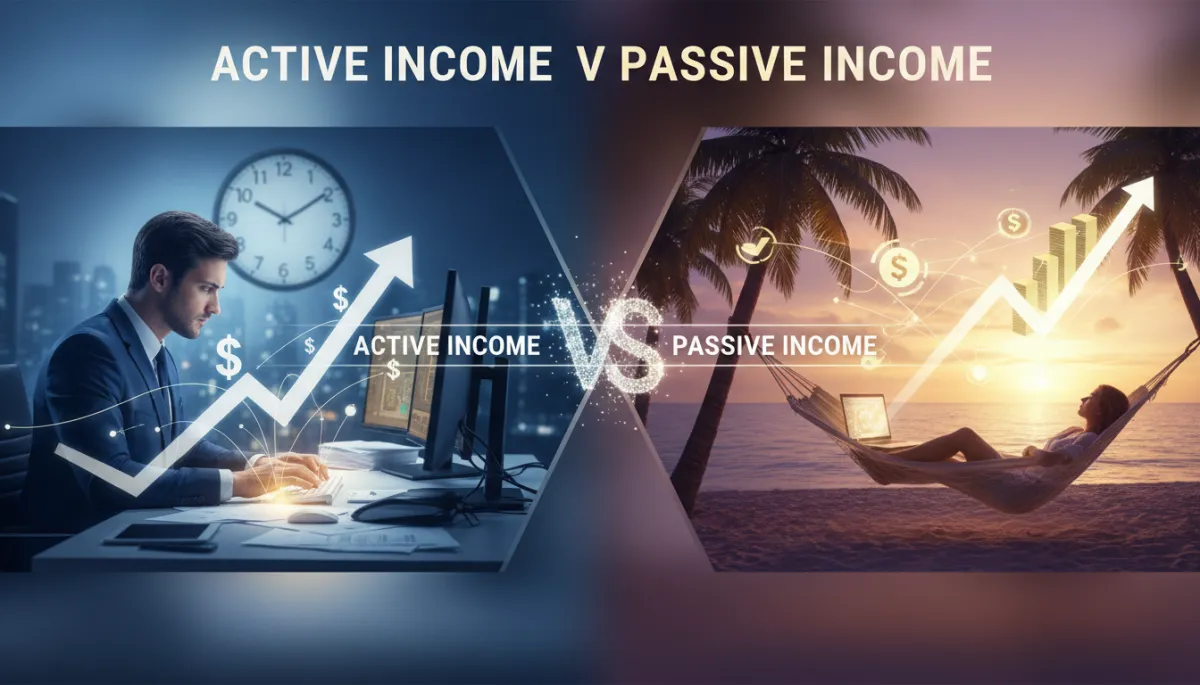
Active Income V Passive Income
Understanding the difference between active and passive income is a crucial step toward building long-term financial security. While both can play an important role in your money strategy, they work very differently and have very different impacts on your time, freedom, and future wealth.

What Is Active Income?
Active income is the money you earn by trading your time and effort for a paycheck. Common examples include salaries, hourly wages, freelance projects, consulting work, and side jobs such as ride-sharing or food delivery. If you stop working, the income stops almost immediately. The defining feature is direct, ongoing involvement: you must keep showing up to keep getting paid.
What Is Passive Income?
Passive income, by contrast, is money earned from assets or systems that continue to generate revenue with limited day-to-day involvement. Classic examples include rental properties, dividends from investments, royalties from books or music, and modern online models such as affiliate marketing. You typically invest time, money, or both upfront to build an asset, and then enjoy ongoing income as that asset continues to work for you in the background.

Seeing the contrast between time-bound and scalable income clarifies your financial priorities.
Pros and Cons of Active Income
Active income has clear advantages. It usually provides predictable cash flow, which makes budgeting easier. Many jobs also include benefits such as health insurance, retirement plans, and paid leave. For people early in their careers, active income is often the fastest way to cover living expenses and start saving.
However, there are limitations. Your earnings are typically tied to hours worked, so there is a natural ceiling on how much you can make. Job security, workplace stress, and the risk of burnout are also real concerns. Most importantly, active income rarely continues if you become unable to work or decide to step back for personal reasons. Relying on it alone can leave your long-term financial future vulnerable.
Pros and Cons of Passive Income
The main advantage of passive income is scalability and freedom. Once a system is in place, it can reach more people or generate more revenue without demanding the same increase in your time. This can provide greater flexibility, help you reduce dependence on a single job, and support long-term goals such as early retirement or location independence.
The trade-off is that passive income usually requires front-loaded effort and patience. Building an audience, creating valuable content, or setting up systems can take weeks or months before you see meaningful results. There can also be financial risk, especially with investments or property. Passive income is not “effort-free”; it is effort-shifted: you work intensely at the beginning so you can work less later.

Well-built affiliate systems can turn consistent online traffic into recurring commission income.
Why Explore Passive Income Now?
For a general audience interested in finance, the most powerful approach is not to abandon active income but to combine both types. Your job or main business can fund your daily life and provide capital, while passive income projects quietly grow in the background. Over time, this mix can reduce financial stress, create a safety net, and give you more options if your circumstances change.
Affiliate Marketing as a Practical Passive Income Stream
One accessible way to start building passive income is affiliate marketing. In simple terms, you recommend products or services you believe in, share a unique link, and earn a commission when people sign up or make a purchase through that link. Once your content and traffic systems are in place, those recommendations can generate income around the clock, even while you are busy with your primary work.
Platforms such as PifEmpire and LeadsLeap provide real-world opportunities to put this into practice. PifEmpire offers a structured ecosystem of online tools and offers that you can promote as an affiliate, giving you the chance to earn commissions while learning more about digital marketing. LeadsLeap, on the other hand, focuses on traffic generation and list building, allowing you to promote your own offers or earn from recommending its advertising and marketing tools to others.
By combining platforms like PifEmpire and LeadsLeap, you can build an integrated system: LeadsLeap helps you attract visitors and grow an email list, while PifEmpire gives you a portfolio of offers to monetize that audience. Over time, this kind of system can evolve from a small side project into a meaningful passive income stream that complements your active earnings.
Moving Forward with a Balanced Income Strategy
Active and passive income are not competitors; they are partners in a well-designed financial life. Active income provides stability and momentum, while passive income offers scalability and resilience. As you plan your next steps, consider setting a clear goal—such as covering one monthly bill with passive income—and explore platforms like PifEmpire and LeadsLeap to begin building that foundation. The earlier you start, the more time your systems have to grow and support the lifestyle you truly want.
Author: Said Ereg | https://saidereg.com/blog | [email protected]





